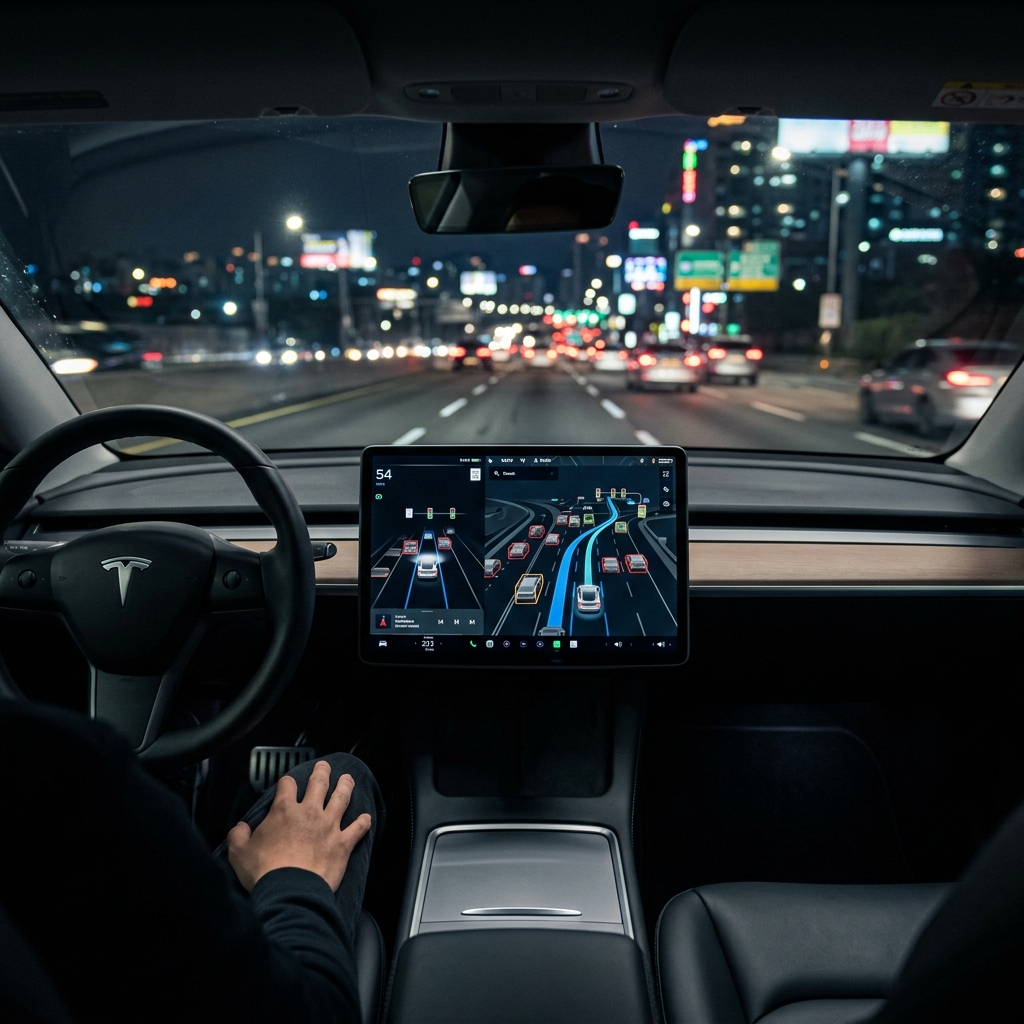
For early adopters and premium Tesla owners, the value proposition of Full Self-Driving (FSD) has long been a complex financial calculation. Initially purchased for sums ranging from $5,000 to as high as $15,000, or maintained via a monthly subscription, FSD has historically been locked to the vehicle’s Vehicle Identification Number (VIN).
However, Tesla has periodically opened windows of opportunity, allowing owners to migrate this premium software asset to a new vehicle. The current, and arguably most critical, FSD transfer window is rapidly closing.
With a hard order-placement deadline of March 31, 2026, premium owners must navigate a highly altered incentive landscape. This challenge is further complicated by the complete removal of the flagship Model S and Model X from Tesla’s referral program.
Here is an analytical breakdown of how to salvage your premium FSD upgrade, navigate the hardware transitions, and strategically time your next vehicle purchase before the cutoff.
The Economics of the March 31, 2026 FSD Transfer
To understand the urgency of the March 31, 2026 deadline, one must look at the underlying software valuation. Currently priced as an $8,000 outright purchase (or $99 per month), FSD represents a significant portion of a vehicle’s residual value—yet insurance companies rarely value the software asset at its true cost in the event of a total loss.
Transferring FSD to a new vehicle essentially acts as an immediate $8,000 rebate on your new purchase, preserving an asset that would otherwise depreciate alongside an aging chassis.
Important: To qualify for the transfer, customers must place an order for a new Tesla vehicle on or before March 31, 2026. The transfer is one-way; once completed, the donor vehicle permanently loses access to the FSD suite, which is then provisioned to the new VIN.
This deadline is particularly critical because of the rapid evolution of Tesla’s neural network-based driving software. With FSD (Supervised) v12.x and the roll-out of v14.x, the software has transitioned to an “end-to-end” neural network architecture. This means the car’s behavior is dictated by deep learning models trained on millions of video clips, rather than hard-coded C++ rules.
For owners driving older Hardware 3 (HW3) vehicles, transferring this software to a new vehicle is the only way to experience the true capabilities of these modern neural networks.
The Premium Squeeze: Model S and Model X Excluded
While the FSD transfer program offers a financial lifeline, Tesla has simultaneously tightened the screws on its premium lineup. In a quiet but impactful policy shift, Tesla completely removed the Model S and Model X from its global referral program.
Previously, buyers purchasing these premium vehicles via a referral link received a $1,000 discount, while referrers earned lucrative credits. Today, purchasing a Model S or Model X yields $0 in referral credits and no purchase discount.
The following table highlights the stark contrast in the current incentive matrix across the Tesla fleet:
| Vehicle Model | Buyer Incentive (Pre-March) | Buyer Incentive (Post-March) | Referrer Reward |
|---|---|---|---|
| Model 3 | 3 Months FSD (Supervised) | 3 Months FSD (Supervised) | $250 Tesla Credit |
| Model Y | 3 Months FSD (Supervised) / Financing Deals | 3 Months FSD (Supervised) / 0% APR Options | $250 Tesla Credit |
| Cybertruck | $1,000 Cash Discount | 3 Months FSD (Supervised) | $250 Tesla Credit (AWD/Cyberbeast) |
| Model S / Model X | $1,000 Cash Discount | None (Removed from Program) | $0 (No Credits Earned) |
This structural shift means that if you are a current Model S or Model X owner looking to upgrade to a new Plaid or Long Range variant of the same model, you cannot stack referral discounts on top of your FSD transfer. The financial incentive is solely driven by the salvage value of your FSD transfer itself.
Hardware Transitions: HW3 vs. AI4 (Hardware 4)
For owners of vehicles built between 2019 and 2023, the decision to transfer FSD is not just financial; it is fundamentally technical. Older vehicles operate on Hardware 3 (HW3), which features dual redundant chips designed over half a decade ago.
Newer Tesla models are equipped with AI4 (Hardware 4), which introduces a host of hardware upgrades:
- Camera Resolution: AI4 utilizes 5-megapixel cameras, a massive leap from the 1.2-megapixel sensors found on HW3. This allows the vehicle to resolve distant objects and read road signs much earlier.
- Processing Power: The AI4 inference engine features significantly higher compute bandwidth and operates at a lower latency, allowing the end-to-end neural networks of FSD v12.5 and v14.x to run with greater parameter density.
- Redundancy: Improved power delivery and thermal management ensure the system remains stable under heavy compute loads.
Tesla has struggled to optimize its latest neural network models to run concurrently on HW3’s limited memory and compute constraints. While HW3 still receives updates, the software branches are increasingly divergent.
By transferring your FSD package to an AI4-equipped vehicle before the March 31, 2026 cutoff, you effectively future-proof your software investment for the next decade of autonomous driving development.
Strategic Upgrade Paths for Premium Owners
Given these parameters, premium Tesla owners have three primary paths to navigate before the deadline:
1. The Direct Premium Upgrade (Model S/X to New Model S/X)
If you require the air suspension, dual-motor/tri-motor performance, and sheer cargo space of the Model S or X, your upgrade path is straightforward but lacks external incentives. You will receive $0 in referral discounts, but you will successfully migrate your FSD package.
To maximize this path, look for regional trade-in bonuses—such as Tesla’s occasional “Premium Trade-In Program”—which can offer complimentary Supercharging kilometers or enhanced trade-in valuations for recycling older vehicles.
2. The Tactical Downsize (Model S/X to Model Y Long Range / Performance)
For many owners, downsizing to a Model Y represents an incredibly efficient financial move. The Model Y currently enjoys some of the most aggressive promotional financing rates in Tesla’s history (including 0% APR promotions on select trims up to 72 months).
By upgrading to a Model Y, you can transfer your lifetime FSD license, leverage a referral link to gain 3 months of FSD (Supervised) for a family member, and secure low-interest financing.
3. The Cybertruck Pivot
If you are transitioning to a Cybertruck, note that the incentive structure changed in March. The previous $1,000 cash discount has been replaced with 3 months of FSD (Supervised).
However, if you are transferring a fully purchased FSD license, the 3-month trial becomes redundant. Ensure you coordinate with your Tesla Advisor to guarantee your transferred license overrides the promotional trial.
Summary: Act Before the Window Closes
The March 31, 2026 deadline represents a critical operational bottleneck. Because Tesla requires the order to be placed by this date, waiting until the final week of March is highly risky. Production delays, delivery logistics, and trade-in valuations take time to process.
For owners who invested heavily in Tesla’s early autonomous vision, this is the definitive moment to transition your software equity into modern AI4 hardware, ensuring your premium upgrade remains an active asset rather than a depreciated legacy feature.
Editor’s Resource
If you are planning to purchase a new Tesla vehicle or home energy system, order through our official referral link (https://ts.la/mate59032) before checkout to unlock current buyer benefits (typically 3 months of Full Self-Driving (Supervised) on eligible vehicles, or about $400 off qualifying Solar). Referrals are not retroactive.
Related: Tesla referral code 2026 · How to use a Tesla referral code · Tesla referral code 2026
Ordering a new Tesla or Energy System?
Use referral code mate59032 at checkout to unlock current buyer benefits—typically a Full Self-Driving trial or Solar discount. Apply the link before you order.