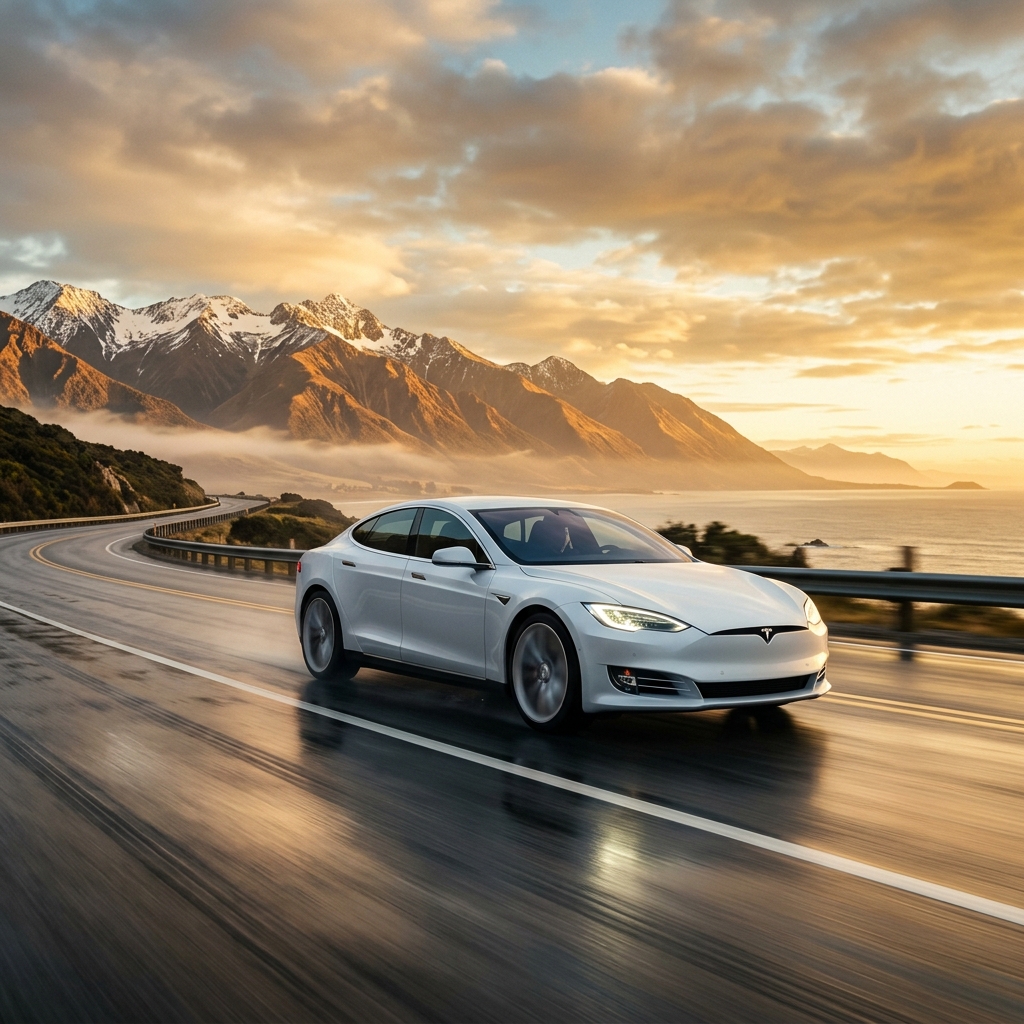
The landscape for electric vehicle incentives in the United States shifted dramatically after September 30, 2025. With the expiration of the federal $7,500 clean vehicle tax credit and the closing of the popular leasing pass-through loophole, prospective Tesla buyers in 2026 face a clean slate.
However, sophisticated buyers are not paying full price. Instead, they are turning to advanced tax engineering: the OBBBA Vehicle Interest Deduction bundling loophole.
By strategically structuring your vehicle purchase contract to bundle hardware like the Tesla Wall Connector and premium software like Full Self-Driving (FSD) Supervised directly into your primary vehicle loan, you can transform personal, non-deductible expenses into highly structured, tax-advantaged deductions. When stacked with the surviving Section 30C charging credit and strategic referral incentives, this method recovers a massive portion of the financial utility previously provided by the defunct federal credit.
1. The OBBBA Vehicle Interest Deduction & The Power of Bundling
To understand this loophole, one must look at how the IRS distinguishes between different types of consumer debt. Under standard tax rules, interest paid on personal loans—including standard auto loans—is completely non-deductible.
However, under the OBBBA (Omnibus Budget Balance Act) Vehicle Interest Deduction framework, taxpayers who meet specific structural requirements can deduct the interest paid on qualified motor vehicle retail installment contracts. This deduction allows you to reduce your taxable income by up to $10,000 on top of your standard deduction.
The “loophole” lies in how you structure the original Motor Vehicle Purchase Agreement (MVPA).
If you purchase a Tesla Model 3 or Model Y and later decide to buy a $500 Tesla Wall Connector or purchase the $8,000 Full Self-Driving (FSD) Supervised package post-delivery, those transactions are treated as standard retail purchases. If you finance them post-delivery via a credit card or personal loan, that interest is strictly personal and non-deductible.
Important: To qualify for the OBBBA deduction, all “extras”—including charging hardware, software upgrades, and factory-installed options—must be codified directly within the original retail installment sales contract of your vehicle loan.
When bundled, the entire loan principal (including FSD and the Wall Connector) is classified as a single, qualified motor vehicle debt. The interest accrued on the software and hardware portion of your loan becomes fully deductible under the OBBBA framework.
2. Financing FSD Supervised (v12.x/v14.x) at Promotional Rates
Tesla’s Full Self-Driving (Supervised) software has transitioned to an end-to-end neural network architecture (moving from the v12.x branch into the highly anticipated v14.x neural planner). This software represents a major paradigm shift in autonomous driving, making it a highly desirable option for new buyers.
At an outright purchase price of $8,000, adding FSD to your vehicle can seem like a steep upfront cost. However, bundling it into your initial vehicle loan—especially when paired with Tesla’s promotional financing rates—yields a dual financial benefit:
- Low-Interest Arbitrage: Tesla routinely offers promotional financing rates (such as 0.99% APR for up to 72 months on select Model 3 and Model Y trims). By bundling the $8,000 FSD package into a 0.99% APR loan, you are financing highly advanced software at a rate far below the rate of inflation.
- Tax-Deductible Interest: Because the $8,000 FSD cost is written into the vehicle’s MVPA, the interest paid on that $8,000 portion is lumped into your OBBBA deduction pool.
Instead of paying a monthly $99 subscription fee for FSD (which is paid with post-tax dollars and offers zero equity or tax write-offs), bundling the lifetime FSD license into your low-interest vehicle loan builds asset value while lowering your annual tax liability.
3. Stacking the Section 30C Home Charger Credit
While the federal vehicle tax credit is gone, the Section 30C Alternative Fuel Vehicle Refueling Property Credit remains active. This credit allows individuals to claim a tax credit equal to 30% of the cost of home EV charging property and installation, up to a maximum of $1,000.
To maximize this credit alongside the OBBBA bundling strategy, you must execute a two-step process:
- Step 1 (The Hardware): Add the $500 Tesla Wall Connector directly to your Tesla vehicle order configuration. This ensures the hardware cost is bundled into the vehicle’s financing contract, qualifying the hardware’s interest for the OBBBA interest deduction.
- Step 2 (The Installation): Pay your certified electrician for the physical installation of the 240V circuit and Wall Connector. Keep this installation invoice separate.
When tax season arrives, you claim the 30C credit on IRS Form 8911. The 30% credit will apply to the $500 hardware cost (which is itemized on your MVPA) plus the professional installation costs.
Note: The 30C credit is subject to census tract restrictions (primarily targeting non-urban or low-income areas). Ensure your home address qualifies under the current IRS census tract map before counting on the full 30% hardware/installation rebate.
4. The 2026 Financial Blueprint: Bundled vs. Unbundled
To visualize the real-world financial impact of this strategy, let us compare a standard, unbundled purchase of a Tesla Model Y with a highly optimized, bundled, and stacked purchase under the 2026 tax guidelines.
| Financial Element | Standard Purchase (Unbundled) | Optimized Strategy (Bundled & Stacked) | Net Financial Advantage |
|---|---|---|---|
| FSD Supervised ($8,000) | Paid via $99/mo subscription (Post-Tax) | Bundled into 0.99% APR Vehicle Loan | Low-interest amortization + interest is tax-deductible |
| Wall Connector ($500) | Purchased separately via Tesla Shop | Bundled into MVPA Vehicle Loan | Qualifies hardware interest for OBBBA deduction |
| OBBBA Interest Deduction | Applies only to base vehicle financing | Applies to vehicle, FSD software, and charger | Maximizes write-off up to the $10,000 limit |
| Section 30C Tax Credit | Missed or poorly documented | 30% Credit claimed on hardware + install | Saves up to $1,000 dollar-for-dollar on tax bill |
| Referral Program Incentive | None (Direct website order) | Ordered via referral link (3 months free FSD) | Saves ~$300 in software trial costs during transition |
5. Strategic Step-by-Step Execution Guide
If you are ready to execute this strategy, follow this exact sequence during your purchasing phase to ensure compliance with both Tesla’s financing department and the IRS:
- Initiate Your Order via a Referral Link: Before configuring your vehicle, ensure you utilize a valid referral link. This instantly secures 3 months of Full Self-Driving (Supervised) for free, allowing you to experience the latest v12.x/v14.x software build before your bundled software license fully amortizes.
- Configure with FSD and Wall Connector Pre-Selected: When customizing your Model 3, Model Y, Model S, or Model X on Tesla’s configurator, add the “Full Self-Driving Capability” and the “Wall Connector” physical hardware to your cart before clicking “Order.”
- Verify the MVPA: When submitting your financing application through the Tesla App, verify that the itemized Motor Vehicle Purchase Agreement includes the Wall Connector ($500) and FSD ($8,000) inside the “Total Vehicle Cost” line item.
- Choose Your Financing Terms: Opt for Tesla’s promotional APR (such as 0.99% or 1.99% terms when active). This ensures your bundled assets are financed with historically cheap capital.
- File Correctly: At tax time, supply your CPA with your MVPA showing the bundled hardware/software, your auto loan interest statement (Form 1098 equivalent), and your electrician’s installation receipt to claim both the OBBBA deduction and the Section 30C credit.
By leveraging the structural nuances of the tax code, 2026 EV buyers can easily bypass the loss of the traditional federal credit, turning their new Tesla into a highly optimized, tax-advantaged asset.
Editor’s Resource
If you are planning to purchase a new Tesla and want to kickstart your savings, order through our referral link (https://ts.la/mate59032) before checkout to receive 3 months of free Full Self-Driving (Supervised) and stackable purchasing incentives. For more detailed breakdowns of vehicle configurations and regional incentives, see also our comprehensive Tesla referral code 2026 guide and our dedicated Model Y referral optimization walkthrough.
Ordering a new Tesla or Energy System?
Use referral code mate59032 at checkout to unlock current buyer benefits—typically a Full Self-Driving trial or Solar discount. Apply the link before you order.