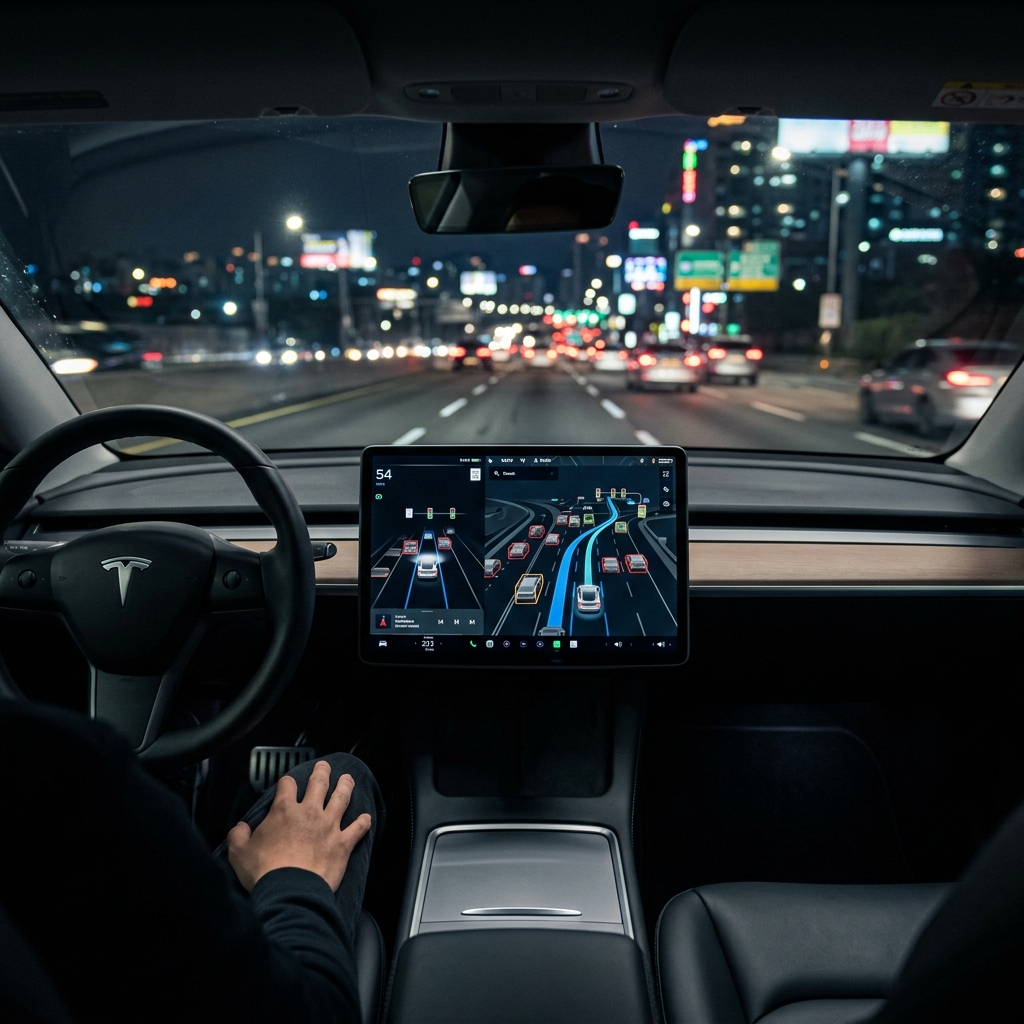
In the landscape of electric vehicle ownership, few software suites carry as much financial weight or community prestige as Tesla’s Full Self-Driving (FSD) capability. Valued at up to $12,000 as a one-time purchase, FSD represents a significant capital investment for early adopters and brand loyalists. For years, the inability to move this costly software license from an older vehicle to a new purchase was a major point of friction for owners looking to upgrade.
When Tesla introduced promotional windows allowing FSD transfers, it was hailed as a major win for customer retention. However, on the night of February 27–28, Tesla quietly executed an unannounced policy reversal on its official FSD transfer support page.
By silently reinstating a strict delivery deadline of March 31, 2026, Tesla disrupted purchase plans for thousands of buyers—particularly those awaiting long-tail custom orders like the Cybertruck AWD or specific Model Y and Model 3 configurations.
This analytical guide unpacks the mechanics of this quiet policy shift, explores the critical “Tesla-side delay” loophole, and provides actionable strategies to protect your $12,000 investment before the clock runs out.
The Silent Midnight Shift: Unpacking Tesla’s Policy Reversal
For a brief period, Tesla’s FSD transfer guidelines offered a highly accommodating terms structure: as long as an owner placed an order for a new vehicle by March 31, 2026, the FSD transfer would be honored, regardless of when the vehicle actually rolled off the assembly line. This was a critical safety net for buyers ordering vehicles with highly volatile delivery timelines.
Without an email, press release, or social media announcement, Tesla modified the fine print on its support portal. The policy reverted to its original, more punitive stance: physical delivery of the vehicle must be taken on or before March 31, 2026, for the FSD transfer to be valid.
Important: Under this revised framework, simply having an active order on the books is no longer sufficient. If your delivery date slips past March 31, 2026, for standard reasons, your $12,000 FSD package will remain tied to your legacy vehicle, leaving your new vehicle without the software unless you purchase or subscribe to it anew.
This sudden shift has left many custom-order buyers in a precarious position. Buyers who placed orders for highly customized Model Y configurations or Cybertruck AWD trims in good faith now face the reality that production bottlenecks could strip them of their FSD transfer eligibility.
The Critical Delivery Loophole: Defending Against Tesla-Side Delays
Fortunately, the policy revision is not entirely without recourse. Deep within Tesla’s updated operational guidelines is a crucial exception regarding logistics delays.
If a customer places an order and receives an official, documented delivery window estimated on or before March 31, 2026, Tesla has committed to honoring the FSD transfer even if the physical delivery date slips into April or beyond due to Tesla-side delays.
To successfully leverage this loophole and protect your transfer, you must establish a clear paper trail:
- Document Your Initial Estimated Delivery Window: Take high-resolution screenshots of your Tesla Account dashboard, the Tesla App, and your Motor Vehicle Order Agreement (MVOA) showing an estimated delivery date on or before March 31, 2026.
- Track VIN Assignment Milestones: Keep a log of when your VIN is assigned. If Tesla unassigns your VIN or pushes your delivery window back due to logistics, transit delays, or quality control holds, request written confirmation of the delay from your Tesla Advisor.
- Avoid Customer-Initiated Delays: Do not change your design configuration, delivery location, or financing terms close to the deadline. Any alteration on the buyer’s end can be categorized as a customer-initiated delay, voiding the protection offered by the Tesla-side delay loophole.
Strategic Pivots: Leveraging Existing Inventory to Save Your Transfer
If you are currently holding a custom order with an estimated delivery window hovering dangerously close to, or past, the March 31, 2026 threshold, the most effective mitigation strategy is to pivot to an existing inventory vehicle.
Tesla’s inventory pipeline is updated continuously with brand-new vehicles that have already completed production. These include vehicles built for showroom display, transit units, or vehicles rejected at delivery due to minor cosmetic issues (which are quickly remediated).
How to Execute an Inventory Pivot
- Monitor Local and National Inventory: Use Tesla’s inventory search tool to filter for Model 3 or Model Y units that match your preferred powertrain (e.g., Long Range All-Wheel Drive) and battery specifications.
- Coordinate with Your Sales Advisor: Do not simply place a brand-new order on an inventory vehicle, as this will require another $250 non-refundable order fee. Instead, contact your assigned Tesla Advisor or visit a local Tesla Delivery Center. Request that they manually match your existing order number to the specific inventory VIN you have identified.
- Confirm the FSD Transfer Flag: Once the inventory VIN is linked to your account, verify with your advisor that the FSD transfer promotion is actively flagged on your new vehicle’s configuration sheet before signing your final delivery paperwork.
The Technical Landscape: FSD v12.x/v14.x and Hardware 4 (AI4)
The urgency surrounding this deadline is compounded by the rapid evolution of Tesla’s Autopilot and FSD software stack. With the deployment of FSD v12.x and the highly anticipated rollouts of v14.x, Tesla has transitioned its driving assistant to an end-to-end neural network architecture. This software relies heavily on the physical compute capabilities of the vehicle’s onboard computer.
Many owners looking to transfer their FSD are moving from older Hardware 3 (HW3) platforms (found in 2018–2022 Model 3 and Model Y vehicles) to the modern Hardware 4 (HW4, officially referred to as AI4) platform.
The differences between these hardware suites are profound, making the transfer of a lifetime FSD license highly desirable:
| Hardware Generation | Camera Resolution | Inference Engine Compute | FSD Software Optimization (2026) |
|---|---|---|---|
| Hardware 3 (HW3) | 1.2 Megapixels | Dual custom Tesla FSD chips (~144 TOPS) | Subject to model parameter truncation; software latency is more pronounced on newer neural nets. |
| Hardware 4 (HW4 / AI4) | 5.0 Megapixels | Next-generation AI processor (~300-500 TOPS) | Native processing of full-resolution camera feeds; primary development target for FSD v12.x/v14.x. |
By securing your FSD transfer to a new HW4-equipped Model Y or Model 3 before the March 31…
Note: This section was auto-completed after a truncated publish. Verify live Tesla terms on Tesla.com before ordering.
Editor’s Resource
If you are planning to purchase a new Tesla vehicle or home energy system, order through our official referral link (https://ts.la/mate59032) before checkout to unlock current buyer benefits (typically 3 months of Full Self-Driving (Supervised) on eligible vehicles, or about $400 off qualifying Solar). Referrals are not retroactive.
Related: Tesla referral code 2026 · How to use a Tesla referral code · Tesla referral code 2026
Ordering a new Tesla or Energy System?
Use referral code mate59032 at checkout to unlock current buyer benefits—typically a Full Self-Driving trial or Solar discount. Apply the link before you order.