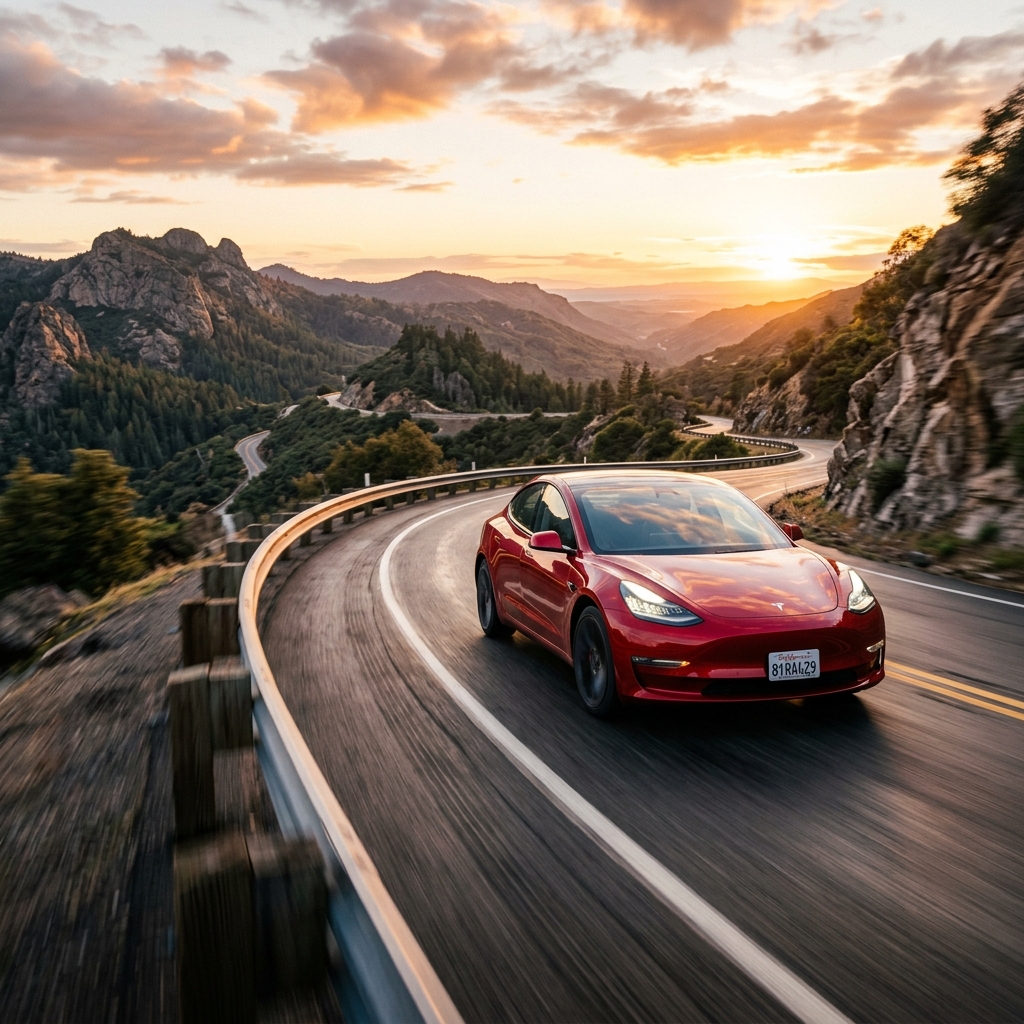
The electric vehicle landscape of mid-2026 is vastly different from the high-growth, supply-constrained market of the early 2020s. Today, the automotive industry faces a convergence of macroeconomic pressures, maturing consumer expectations, and intense competition from legacy automakers. While competitors introduce formidable new platforms—such as Hyundai’s highly anticipated three-row 2026 IONIQ 9 starting at $60,555—Tesla has quietly engineered a profound strategic pivot.
Rather than engaging solely in a race-to-the-bottom hardware price war, Tesla is leveraging its massive manufacturing scale, vertical integration, and AI computing dominance to redefine its value proposition. This mid-2026 strategy relies on three pillars: surgical pricing adjustments for the Model 3 and Model Y, the mainstream deployment of Full Self-Driving (FSD) v14, and a highly optimized referral program designed to drive software adoption.
The Mid-2026 Pricing Paradigm: Defending Margins Against a New Wave of Rivals
As legacy manufacturers scale their second-generation EV architectures, the premium crossover and SUV segments have become incredibly crowded. With vehicles like the 2026 Hyundai IONIQ 9, Kia EV9, and Rivian R1S vying for affluent family buyers, Tesla has adjusted its pricing strategy for the Model 3 and Model Y to maintain market dominance while protecting its industry-leading operating margins.
Instead of the erratic, sweeping price cuts that characterized 2023 and 2024, Tesla’s mid-2026 approach is highly targeted. The company has stabilized base prices for the Model 3 and Model Y, utilizing regional inventory incentives, localized financing promotions, and software-locked feature upgrades to stimulate demand. This stabilization allows Tesla to preserve the residual values of its fleet—a critical factor for leasing partners and trade-in customers.
By positioning the Model Y as the high-efficiency, high-volume benchmark, Tesla forces competitors entering the $50,000 to $70,000 price bracket to justify their premium pricing. While a competitor like the IONIQ 9 offers spacious three-row utility, it commands a significant price premium over a highly optimized Model Y Long Range. Tesla’s ability to offer immediate delivery, a mature Supercharger network, and superior software integration remains a formidable moat.
FSD v14.x and the Architecture of Autonomy
The true centerpiece of Tesla’s mid-2026 strategy is the transition of Full Self-Driving (Supervised) from a cutting-edge novelty to a core purchasing driver. With the release of FSD v14.x, Tesla has achieved a significant milestone in its end-to-end neural network architecture.
Unlike earlier iterations (such as the v11 series), which relied on millions of lines of C++ heuristic code to dictate vehicle behavior, FSD v14.x utilizes a pure “photon-to-control” deep learning model. The vehicle’s onboard AI cluster processes raw video inputs from the eight external cameras and directly outputs steering, braking, and acceleration commands.
Key Technical Advancements in FSD v14.x:
- Latency Reduction: Photon-to-control processing latency has been reduced to under 50 milliseconds, enabling human-like reaction times in complex urban environments.
- World Model Integration: The neural network now features an integrated “world model” that predicts the trajectories of pedestrians, cyclists, and surrounding vehicles up to several seconds into the future, even when temporarily obscured by obstacles.
- Training Scale: Trained on billions of miles of high-quality fleet data and powered by Tesla’s massive Cortex supercluster, v14.x has dramatically increased the mean distance between necessary driver interventions.
For the daily driver, FSD v14.x delivers a remarkably smooth, assertive, and natural driving profile. The hesitant behavior, phantom braking, and rigid lane-keeping of previous generations have been largely supplanted by fluid lane changes, proactive speed adjustments, and confident handling of unmarked roads and construction zones.
Comparing the Mid-2026 Lineup
To understand how Tesla’s pricing and vehicle specifications stack up in the current market, consider the following technical breakdown of the core Model 3 and Model Y variants:
| Model & Variant | EPA Range (Est.) | 0-60 mph (Sec) | Starting MSRP (USD) | Primary Value Driver |
|---|---|---|---|---|
| Model 3 Rear-Wheel Drive | 272 Miles | 5.8s | $38,990 | Unmatched daily efficiency and entry-level affordability. |
| Model 3 Long Range AWD | 341 Miles | 4.2s | $47,490 | Premium highway cruiser with exceptional all-weather capability. |
| Model Y Long Range AWD | 308 Miles | 4.8s | $47,990 | The gold standard for family utility, cargo space, and efficiency. |
| Model Y Performance | 277 Miles | 3.5s | $51,490 | Sports-car acceleration paired with versatile crossover packaging. |
The Referral Program as an Ecosystem Accelerator
Tesla’s referral program has evolved from a simple customer acquisition tool into a sophisticated ecosystem accelerator. In the past, referrals rewarded buyers and referrers with free Supercharging miles or physical merchandise. In mid-2026, the program is laser-focused on expanding the active user base of Tesla’s software suite—specifically FSD (Supervised).
By shifting the primary referral reward to a complimentary trial of Full Self-Driving, Tesla achieves two critical strategic objectives simultaneously:
- Zero-Marginal-Cost Incentives: Unlike cash discounts or free hardware retrofits, delivering a software-based referral reward incurs virtually zero marginal cost for Tesla, preserving corporate gross margins.
- The “Hook” Effect: Experiencing FSD v14.x for three months significantly increases the likelihood of a permanent subscription or upfront purchase. Once a driver becomes accustomed to a vehicle that navigates highway interchanges, handles stop-and-go traffic, and parks itself, returning to manual driving feels like a technological step backward.
This referral mechanism bypasses traditional, expensive dealership marketing campaigns. Instead, Tesla leverages its passionate owner base to act as a decentralized sales force, demonstrating the tangible benefits of autonomy directly to friends, family, and colleagues.
The Road Ahead: Software-Defined Value
Tesla’s mid-2026 strategy demonstrates a mature, forward-looking approach to the EV transition. While competitors focus on scaling heavy, expensive hardware platforms to match Tesla’s physical specifications, Tesla is shifting the battlefield to artificial intelligence, fleet learning, and software monetization.
By stabilizing hardware pricing, refining the physical vehicles, and using the referral network to democratize access to FSD v14.x, Tesla ensures that its vehicles do not just remain competitive at the point of sale—they continue to improve, adapt, and lead long after they leave the delivery center.
Editor’s Resource
If you are planning to purchase a new Tesla vehicle or home energy system, order through our official referral link (https://ts.la/mate59032) before checkout to unlock current buyer benefits (typically 3 months of Full Self-Driving (Supervised) on eligible vehicles, or about $400 off qualifying Solar). Referrals are not retroactive.
Related: Tesla referral code 2026 · How to use a Tesla referral code · Tesla referral code 2026
Ordering a new Tesla or Energy System?
Use referral code mate59032 at checkout to unlock current buyer benefits—typically a Full Self-Driving trial or Solar discount. Apply the link before you order.