Tesla has long abandoned the traditional automotive model of rigid annual product cycles. Instead, the Texas-based electric vehicle pioneer operates more like a silicon valley software giant, adjusting pricing, shifting physical hardware trims, and deploying massive software overhauls asynchronously.
The mid-2026 product landscape highlights this philosophy perfectly. From the deployment of Full Self-Driving (FSD) V14.3.3 to a surprising price increase for the Model Y and a complete restructuring of the 2026 Cybertruck lineup, Tesla is fundamentally shifting its hardware and software strategies.
FSD V14.3.3 and the Live Intervention Counter: A Paradigm Shift in Autonomy Tracking
For years, the true progress of Tesla’s Full Self-Driving (Supervised) suite has been a subject of intense debate among owners, short-sellers, and autonomy researchers. While crowd-sourced trackers attempted to log Miles Per Intervention (MPI), Tesla kept its internal telemetry close to its chest.
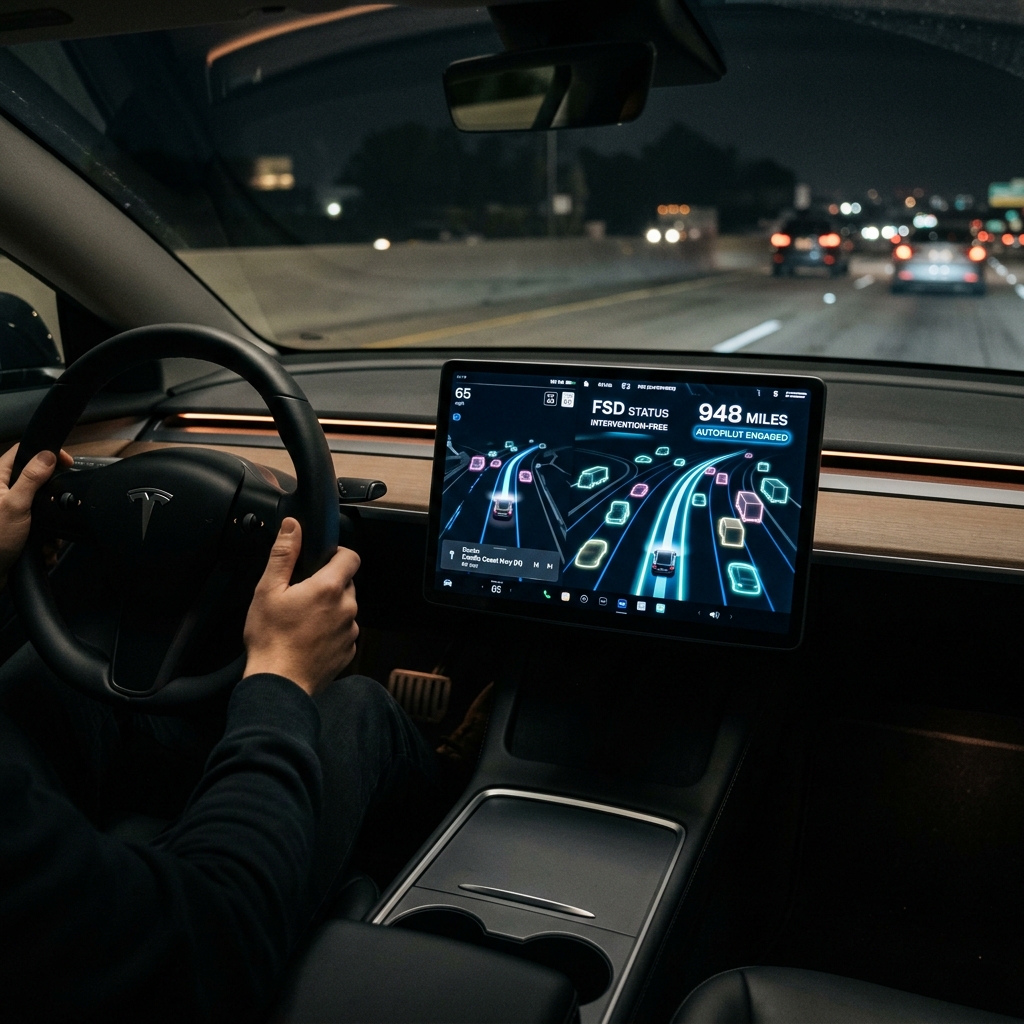
That dynamic has shifted with the wide release of FSD V14.3.3. Built upon an updated end-to-end neural network architecture, V14.3.3 introduces a highly anticipated and incredibly transparent feature: a live intervention counter visible directly on the vehicle’s central display.
[ FSD V14.3.3 Telemetry Screen ]
----------------------------------------------
Current Drive: 14.2 Miles
Active Interventions: 0
System Confidence: High (Neural Net Pathing Active)
----------------------------------------------
This feature does more than simply gamify the driving experience; it acts as an active communication tool between the vehicle’s AI engine and the driver. By logging physical steering overrides and brake presses in real-time, Tesla is gathering highly structured, localized disengagement data.
From an engineering perspective, V14.3.3 represents a significant step forward in path-planning smoothness. Previous iterations (such as the V12.x branch) occasionally suffered from micro-hesitations—subtle steering wheel jerks or unnecessary deceleration when approaching complex intersections. V14.3.3 utilizes a higher-capacity video-in, control-out neural network trained on millions of highly curated, high-quality video clips, resulting in human-like defensive driving maneuvers and significantly reduced latency in critical decision-making windows.
The 2026 Cybertruck Lineup Shakeup: Trims, Pricing, and Engineering Realities
The Cybertruck remains one of the most polarizing and technologically ambitious vehicles on the road today. However, manufacturing a stainless-steel exoskeleton, a 48-volt auxiliary architecture, and a steer-by-wire system at scale has forced Tesla to continually refine its production lines and trim availability.
In a surprising move, Tesla has officially discontinued the short-lived Rear-Wheel Drive (RWD) “Long Range” Cybertruck variant, which was axed a mere five months after its mid-2025 debut. In its place, Tesla has restructured the 2026 Cybertruck lineup into two distinct tiers, introducing a new cost-conscious base Dual Motor AWD trim while slashing prices on the high-end Cyberbeast.
To achieve a lower starting MSRP of $79,990, the new base Dual Motor AWD sacrifices several premium features:
- Suspension: Replaces the adaptive air suspension system with traditional steel coil springs.
- Towing & Payload: Slightly reduced towing capacity due to structural and suspension changes.
- Interior: Features a more streamlined, utilitarian cabin with standard materials rather than the premium finishes found on higher-tier models.
Meanwhile, the top-of-the-line Cyberbeast (Tri-Motor AWD) received a substantial price adjustment, lowering its cost of entry by $15,000 compared to its initial launch pricing.
| Cybertruck Trim (2026) | Drivetrain Configuration | Suspension System | Base MSRP (Excl. Fees) | Key Structural Differences |
|---|---|---|---|---|
| Base Dual Motor AWD | Dual-Motor AWD | Standard Coil Springs | $79,990 | Utility interior, reduced towing capacity, no air suspension |
| Premium Dual Motor AWD | Dual-Motor AWD | Adaptive Air Suspension | $99,045 | Premium cabin materials, full towing capacity, bio-weapon defense mode |
| Cyberbeast | Tri-Motor AWD | Adaptive Air Suspension | $114,990 | Maximum performance, off-road light bar capability, premium cabin |
This restructuring indicates that Tesla is actively optimizing its gigafactory production lines. By removing low-margin variants like the RWD and offering a simplified, coil-sprung base Dual Motor, Tesla can maximize its throughput while appealing to commercial fleet buyers and utility-focused owners.
Model Y Pricing Dynamics: Reading the Macroeconomic Tea Leaves
For the first time in nearly two years, Tesla has raised the base price of the Model Y in the United States. While the increase is relatively modest, the psychological and macroeconomic implications are profound.
Historically, Tesla has used aggressive price cuts as a high-velocity demand lever, squeezing legacy automakers trying to scale their own EV offerings. A price increase signals several key shifts:
- Inventory Stabilization: Tesla has successfully cleared out excess inventory from previous quarters, aligning production rates tightly with organic demand.
- Preparation for “Juniper”: With a major Model Y refresh (codenamed Juniper) on the horizon, raising the price of the current generation prevents a massive pricing cliff when the updated model debuts. It also helps preserve the residual value of existing vehicles.
- Margin Protection: Amid fluctuating battery raw material costs and global supply chain adjustments, Tesla is prioritizing gross automotive margin over raw volume growth.
Note: For potential buyers, this pricing shift serves as a reminder that Tesla’s pricing is highly dynamic. Waiting for further price cuts on mature platforms like the Model Y may no longer be a viable strategy as Tesla shifts its focus toward premium software monetization (FSD subscriptions) and next-generation vehicle architectures.
Under the Stainless Steel Hood: 48V Architecture and 500 kW Charging
The Cybertruck’s physical updates are supported by some of the most advanced electrical engineering in the automotive industry.
Most modern cars operate on a legacy 12-volt electrical system, which requires thick, heavy copper wiring harnesses to deliver power to window motors, steering actuators, and infotainment screens.
Editor’s Resource
If you are planning to purchase a new Tesla vehicle or home energy system, order through our official referral link (https://ts.la/mate59032) before checkout to unlock current buyer benefits (typically 3 months of Full Self-Driving (Supervised) on eligible vehicles, or about $400 off qualifying Solar). Referrals are not retroactive.
Related: Cybertruck referral · How to use a Tesla referral code · Tesla referral code 2026
Ordering a new Tesla or Energy System?
Use referral code mate59032 at checkout to unlock current buyer benefits—typically a Full Self-Driving trial or Solar discount. Apply the link before you order.