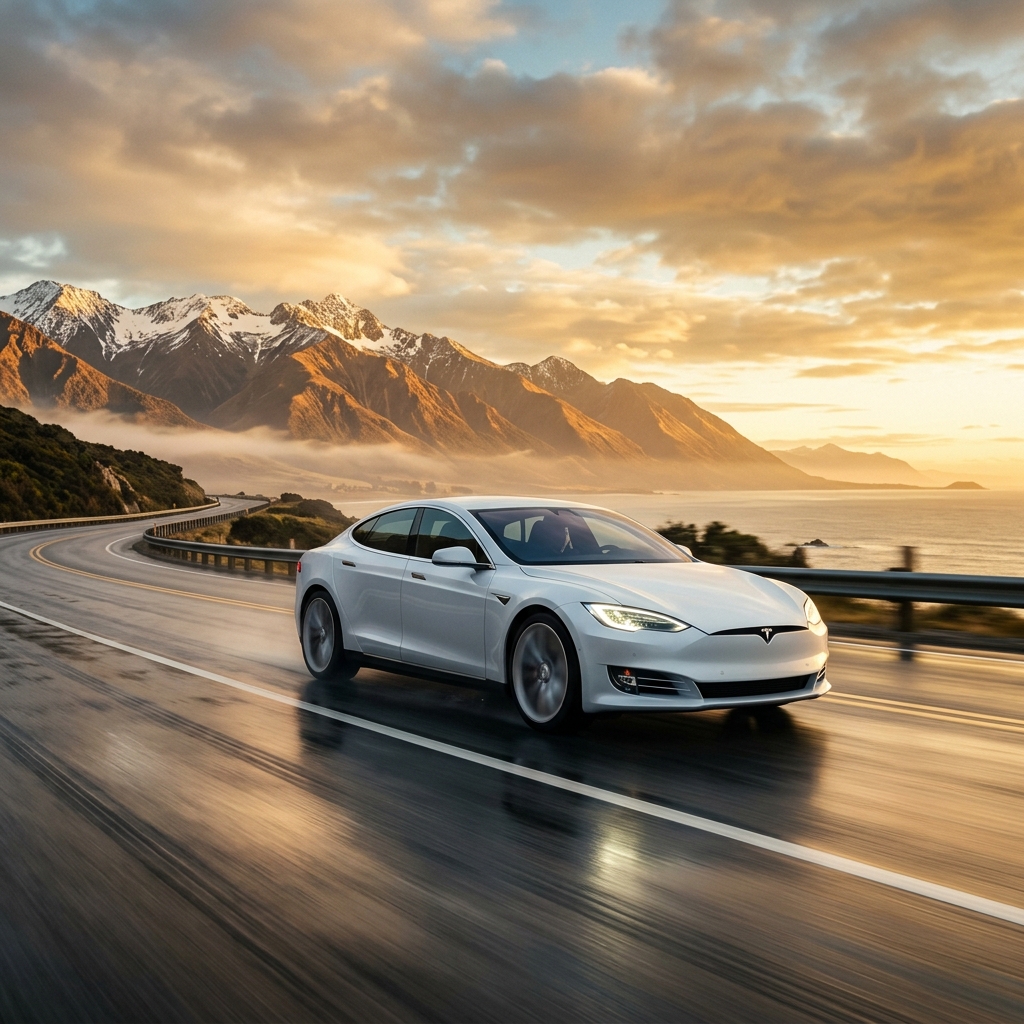
When Tesla restructured its buyer incentive framework on October 30, 2026, the headline for prospective EV buyers appeared straightforward: standard vehicle referral discounts and direct cash perks for new custom vehicle orders were officially sunsetted. However, behind this operational pivot lies a more sophisticated purchasing landscape.
While custom configurator orders no longer auto-apply direct buyer referral cash price reductions, Tesla’s internal yield management algorithms have aggressively shifted margin concessions to another avenue: Existing Vehicle Inventory.
By understanding how factory inventory pricing curves operate in late 2026—and pairing dynamic price adjustments with available promotional APR financing, affinity programs, and trade-in incentives—savvy buyers can reliably capture between $1,200 and $2,400 in net acquisition savings. This comprehensive buying guide outlines the exact mechanics of Tesla’s current inventory pricing model, technical vehicle considerations for 2026 builds, and how to execute a fully optimized order stacking strategy.
1. Deconstructing Tesla’s Dynamic Inventory Pricing Model
Tesla does not maintain traditional dealer floor-plan structures. Instead, vehicle inventory falls into three distinct classifications within its logistics network:
- Transit Inventory: New vehicles currently en route from Giga Texas or Giga California to regional delivery hubs that have not been assigned to a custom order VIN match.
- On-Site Available Inventory: Unmatched, zero-mile units sitting at local delivery sites due to order cancellations, configuration over-production, or geographic re-allocations.
- Showroom & Demo Units: Vehicles used for physical retail display or test drives, carrying minor odometer mileage (typically between 50 and 2,500 miles).
Important: Inventory price adjustments are dynamic and recalculate automatically based on regional supply-demand metrics, proximity to quarterly financial cutoffs, and days-in-transit parameters.
During mid-quarter production cycles, unassigned transit inventory often carries algorithmic markdowns between 3% and 6% off base MSRP—translating directly to $1,400 to $2,400 in direct price reductions on popular builds like the Model Y Long Range and Model 3 Performance.
Custom Order vs. Existing Inventory Comparison Matrix
To visualize how inventory positioning compares against standard custom orders in late 2026, consider the following technical and financial baseline:
| Vehicle Trim & Baseline | Custom Order Base MSRP | Typical Inventory Price Cut | Available Financing APR | Estimated Net Savings Range |
|---|---|---|---|---|
| Model Y Long Range AWD | $44,990 | $1,200 – $2,400 | 1.99% APR (Up to 60 Mos) | $2,200 – $3,900 (Financed) |
| Model 3 Performance | $54,990 | $1,500 – $2,200 | 1.99% APR (Up to 60 Mos) | $2,500 – $3,700 (Financed) |
| Model 3 Premium RWD | $42,490 | $800 – $1,600 | 2.49% APR (Up to 60 Mos) | $1,300 – $2,400 (Financed) |
| Model S Dual Motor AWD | $74,990 | $2,000 – $3,500 | 3.49% APR (Standard) | $2,500 – $4,000 (Direct) |
2. The Late-2026 Incentive Stacking Architecture
Securing maximum value on a 2026 Tesla requires moving beyond raw vehicle discounts. Because Tesla allows specific promotional offers to stack concurrently on inventory acquisitions, structured ordering can unlock significant financial leverage.
+-----------------------------------------------------------------------+
|                    2026 TESLA INCENTIVE STACK FRAMEWORK               |
+-----------------------------------------------------------------------+
|  [ Factory Inventory Discount ] ---> Up to $2,400 off listed MSRP     |
|              +                                                        |
|  [ Low APR Financing Offer  ] ---> 1.99% - 2.49% Rate Subsidization   |
|              +                                                        |
|  [ Targeted Affinity Credit ] ---> $500 (Military/Teacher/Medical)    |
|              +                                                        |
|  [ ICE Trade-in Advantage   ] ---> 2,000 Free Supercharging Miles     |
|              +                                                        |
|  [ Owner Loyalty Benefit    ] ---> $500 Direct Account Credit         |
+-----------------------------------------------------------------------+
Breakdown of Stackable Layers
- Subsidized Promotional APR Rates: Tesla periodically offers subsidized financing rates (such as 1.99% APR on Model Y trims and Model 3 Performance builds) through participating lenders. Over a 60-month term, securing a 1.99% rate versus a conventional 6.5% auto loan yields approximately $4,100 to $5,200 in interest expense savings alone.
- Targeted Affinity Programs: Qualifying active military, veterans, first responders, healthcare workers, teachers, and university students receive an additional $500 point-of-sale deduction upon credential verification.
- ICE Trade-In Supercharging Perks: Trading in an internal combustion engine (ICE) vehicle alongside your inventory purchase unlocks 2,000 complimentary Supercharging miles credited directly to your Tesla app account.
- Existing Owner Loyalty Discounts: Current Tesla owners purchasing an additional inventory vehicle qualify for a $500 loyalty discount, which automatically attaches to the primary account email upon order placement.
- Tax & Interest Deductibility: Under provisions in the One Big Beautiful Bill Act, qualifying U.S.-assembled EVs purchased for personal use allow eligible taxpayers to deduct up to $10,000 annually in auto loan interest—further lowering the net effective total cost of ownership.
3. Technical Considerations for 2026 Inventory Vehicles
Before clicking “Place Order” on an inventory vehicle, prospective buyers must evaluate the hardware specifications of the unit listed. Tesla continuously updates hardware components on the assembly line without waiting for traditional model-year transitions.
Note: Vehicles listed in inventory may feature slight specification variances based on their manufacturing date and Gigafactory origin.
Hardware 4 (HW4) and FSD v14.x Preparedness
All 2026 inventory models come equipped standard with Tesla’s Hardware 4 (HW4) suite, featuring high-resolution camera sensor arrays and an integrated dual-node inference computer. If full autonomous driving capabilities are a priority, inventory vehicles built in mid-to-late 2026 are fully optimized for neural network builds operating under FSD v14.x software architectures.
Battery Pack Chemistry: LFP vs. High-Nickel NCM
When browsing inventory configurations for Model 3 and Model Y variants, pay close attention to charging characteristics:
- Lithium Iron Phosphate (LFP): Found primarily on standard-range rear-wheel drive inventory variants. LFP packs tolerate daily charging to 100% State of Charge (SoC) without degradation issues and offer high cycle endurance.
- Nickel- Cobalt-Manganese (NCM): Found on Long Range and Performance All-Wheel Drive inventory vehicles. These packs offer higher gravimetric energy density and superior cold-weather preconditioning performance, though daily charging should be capped at 80% SoC for optimal longevity.
4. Step-by-Step Tactical Guide to Securing Inventory Drops
To capture the deep $2,000+ discounts before inventory units are claimed by automated tracking scripts, follow this tactical execution process:
Step 1: Broaden Search Radius Parameters
Tesla’s default web search restricts inventory results to a 50-mile radius from your postal code. Expand your search filter to 200 miles or nationwide. Transport fees for regional movement (typically $500 to $1,000) are frequently dwarfed by a $2,400 price adjustment on a vehicle sitting at a neighboring distribution site.
Step 2: Differentiate Between Transit and Demo Status
Always inspect the odometer disclosure on the listing card:
- 50 miles or fewer: Brand-new transit vehicle eligible for all new-vehicle finance rates and state-level EV incentives.
- 50 to 2,500 miles: Factory demo vehicle. While carrying steeper price cuts, verify whether regional state utility rebates consider demo models as “used” prior to finalizing paperwork.
Step 3: Execute Order Placement Immediately
Inventory adjustments on high-demand trims are volatile. Once an inventory vehicle matching your desired paint, wheel, and interior configuration appears with a target markdown, secure the vehicle reservation fee ($250 non-refundable) right away. Configuration changes cannot be made once an inventory VIN is locked.
5. Summary & Final Verdict
The sunsetting of standard buyer referral discounts on October 30, 2026 marked a transition toward dynamic, market-driven vehicle pricing. By leveraging Tesla’s regional existing inventory search tools, locking in low promotional APR financing, and applying secondary trade-in or affinity incentives, prospective owners can comfortably achieve total acquisition savings exceeding $2,400.
Editor’s Resource
If you are planning to purchase a new Tesla vehicle, energy system, or ecosystem accessory, make sure your account is configured correctly prior to placing your order. While vehicle orders no longer utilize standard front-end buyer codes, referral credentials remain vital for energy products and loyalty rewards. Visit our comprehensive Tesla inventory referral directory or use our direct link below before checking out:
- Official Referral Link: https://ts.la/mate59032
- Related Guide: Read our step-by-step breakdown on How to use a referral code during checkout.
Ordering a new Tesla or Energy System?
Use referral code mate59032 at checkout to unlock current buyer benefits—typically a Full Self-Driving trial or Solar discount. Apply the link before you order.